Good to know: Cruise Labuan Bajo is operated by Komodo Luxury, a real award-winning Indonesian liveaboard operator (TripAdvisor Travelers’ Choice 2022–2025, founded 2015, part of Juara Holding Group Limited). We cruise Komodo National Park aboard our own luxury phinisi. Komodo National Park (UNESCO 1991) requires park entry fees/permits — general information, verify current rates. Dive-site conditions and seasons are indicative and vary; Komodo currents are strong and many north sites are advanced. Marine life — mantas, hammerheads — is seasonal and wild, and can never be guaranteed. Prices are indicative ranges, by quote, and vary by vessel, cabins, season, itinerary length and group size. Enquiries and booking via WhatsApp +62 811-3823-875 and sales@komodoluxury.com.
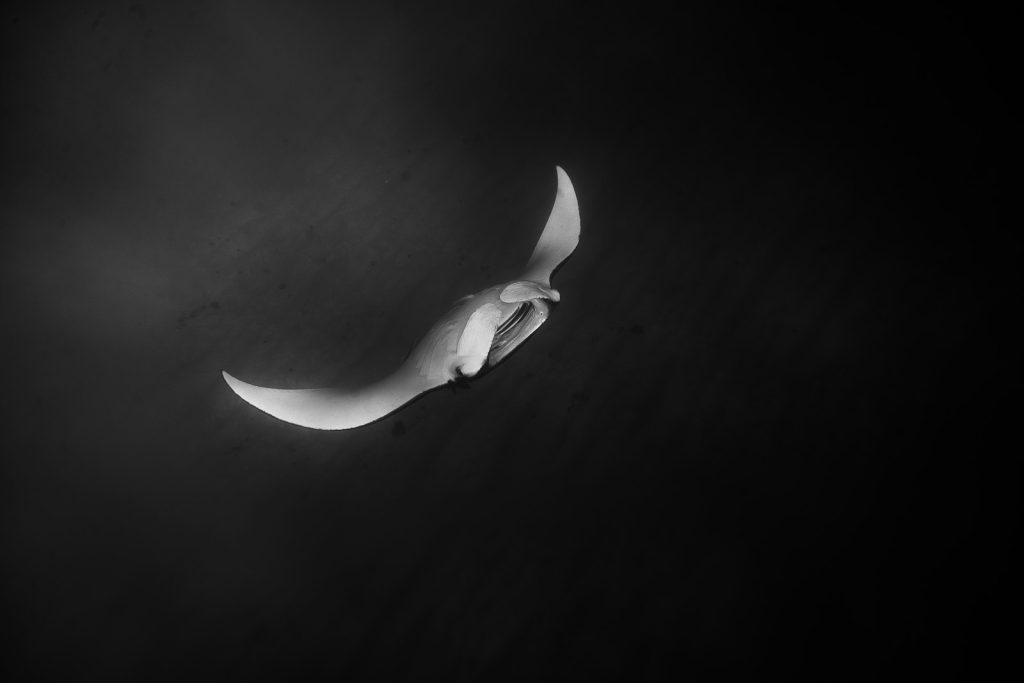
A komodo cruise manta rays experience is a multi-day sailing through Komodo National Park focused on visiting manta cleaning and feeding sites for diving and snorkelling with wild manta rays. On a dedicated manta-focused Komodo cruise, we time the itinerary, tides, and routes so you can spend more of your trip in the water with mantas and less time just passing by the sites.
Why Komodo is One of Asia’s Most Reliable Places for Manta Rays
Komodo National Park sits at the meeting point of the Pacific and Indian Oceans, inside the Indonesian Throughflow. This mixing of water masses creates strong currents, rich plankton, and coral reefs that support year-round manta cleaning stations and feeding areas.
Two of the most famous manta sites lie right on our regular routes:
- Mawan / Siaba Kecil area (often called “Manta Point” on Komodo cruise itineraries)
- Manta Alley in the south of Komodo Island
As your PADI dive guide and skipper with Cruise Labuan Bajo by Komodo Luxury, I plan every manta-focused cruise day around:
- Tide windows for safer, more comfortable currents
- Water temperature and season (north vs south conditions)
- Your group’s certification levels and in-water confidence
Manta rays in Komodo are wild, fully protected animals. Sightings are frequent in season, but they are never guaranteed.
Komodo Cruise Manta Rays: How a Typical Itinerary Works
Komodo Luxury operates our own fleet of luxury phinisi yachts from Labuan Bajo:
• Komodo Signature (luxury phinisi)
• Komodo Prestige (luxury phinisi)
From these yachts, Cruise Labuan Bajo runs:
- Multi-day private charters
- Scheduled/shared luxury liveaboard-style cruises
- Overnight and day trips
All itineraries are customised by season and sea conditions, but here is a sample 3D2N manta-oriented route I often run.
| Day | Main Stops | Typical Activities | Manta Focus | Indicative Dive Level* |
|---|---|---|---|---|
| Day 1 | Labuan Bajo – Sabayur – Sebayur Kecil / Siaba | Check dive, reef snorkel, easy night dive (optional) | Briefing on manta behavior & current techniques | Open Water & above |
| Day 2 | Mawan / “Manta Point” area – Tatawa / Siaba Kecil | 2–3 dives/snorkels, drift snorkeling if conditions allow | Main manta day (north/central mantas) | Open Water with drift experience recommended |
| Day 3 | Komodo Island dragons – Pink Beach – sail back to Labuan Bajo | Dragon walk, shallow reef snorkel, optional last dive (by plan) | Chance of additional mantas on route if tides match | All levels for snorkel; OWD+ for dive |
*Levels are indicative only. Final planning depends on conditions and individual skills.
If you have 4D3N or 5D4N, we can add southern Komodo for a manta alley cruise (conditions and season dependent), along with more advanced current dives in the north for qualified divers.
For tailored manta itineraries, you can plan your trip with our team or message us on WhatsApp at +62 811-3823-875.
Key Komodo Manta Sites: Conditions, Seasons, Levels
Below is a practical overview I use when briefing guests onboard. All depths and conditions are indicative and can change with tides and weather.
- Mawan & “Manta Point” Area (Central Komodo)
-
What it is: Sandy bottom with coral bommies used as cleaning stations; the area around Mawan and nearby reefs is often described on itineraries as “Manta Point Komodo cruise”.
Typical depth: Approx. 5–18 m for divers; 0–5 m for snorkellers above the action.
Currents: Mild to moderate; can be strong on spring tides. Often manageable for beginners in the right window.
Best season: Good chance of mantas most of the year; generally stronger presence Dec–March, but they can appear in any month.
Level: Open Water certified and above; snorkelling suitable for confident swimmers with a guide and surface support. - Manta Alley (Southern Komodo)
-
What it is: Narrow channel and cleaning station in the south; this is the classic manta alley cruise highlight, especially on longer itineraries.
Typical depth: Approx. 8–25 m for divers; snorkellers usually remain in the shallower portions near the reef edge.
Currents: Often strong and variable, including downcurrents; can be challenging and is always treated as an advanced site.
Best season: Southern Komodo is cooler and often clearer roughly May–Oct; mantas can be abundant, but conditions can also be rougher on the surface.
Level: Advanced Open Water with strong current experience preferred; we limit this site to suitably trained, confident divers and good snorkellers only when safe. - Siaba Kecil & Surroundings
-
What it is: Drift reef with occasional mantas, turtles, and schooling fish; excellent secondary site on a manta-focused day.
Typical depth: Approx. 5–25 m.
Currents: Can be fast; we time the entry for a controlled drift.
Best season: Year-round, with variable visibility.
Level: Open Water with prior drift experience recommended. - Tatawa Kecil / Tatawa Besar
-
What it is: Colourful reefs with rich soft and hard corals, possible mantas in the blue, often used as part of a wider manta day in central Komodo.
Typical depth: Approx. 5–25 m.
Currents: Moderate to strong; these are true drift dives on many days.
Level: Open Water with comfort in current; Advanced preferred.
Again, none of these sites can “guarantee” manta rays, even in peak season. We plan the cruise to maximise your chances while keeping everyone safe.
Diving vs Snorkelling with Mantas on a Komodo Cruise
Divers: What to Expect
As a diver, you get the chance to:
- Sit quietly on the sand at cleaning stations and watch mantas circle
- Experience gentle (and sometimes not-so-gentle) drifts along reef edges
- Spend more time at depth if mantas are feeding mid-water
Typical daily schedule on a manta-focused day:
- Early morning dive (often calmer currents, good chance of mantas)
- Late morning second dive, possibly at the same site or nearby reef
- Afternoon third dive or guided snorkel, depending on conditions and energy
We usually keep group sizes small and match buddies by experience. Komodo’s currents are no joke; even sites labelled “easy” can switch quickly, so we always do detailed briefings and current checks before entering.
Snorkellers: Front-Row Seat from the Surface
You do not need to dive to enjoy mantas in Komodo. Many of the best encounters happen in shallow water.
For snorkellers I focus on:
- Choosing times when the current is manageable
- Zodiac support so you can drift safely with a guide
- Clear instructions on staying calm and horizontal in the water, not chasing mantas
If conditions are calm, we often let snorkellers drift along the reef while the boat tracks you from the surface. On stronger current days, we may limit the time in the water or shift to a more protected bay.
Current, Visibility & Seasonality: Being Honest about Conditions
Komodo National Park is known for strong currents and fast-changing conditions. This is what brings the nutrient-rich water and the mantas — but it also means we must respect the sea every single day.
Currents
- North and central sites (including many manta points) can have strong tidal currents.
- South Komodo (Manta Alley) often has complex currents and frequent downcurrents.
- We plan dives on slack or mild phases whenever possible, but “no current” is never guaranteed.
If on any given day I assess that conditions are unsafe or beyond the comfort level of the group, we change the plan — even if it means postponing or skipping a famous site.
Visibility
- Central/north Komodo: Often clearer during the drier months (approx. May–Oct), but can be affected by plankton blooms.
- South Komodo: Cooler water and often variable visibility; some of the best manta days happen in “green” plankton-rich water.
For manta encounters, slightly lower visibility can actually be good because it usually means more plankton — the mantas’ food.
Seasons & Manta Presence
Based on long-term patterns:
- Central/north manta areas: Common sightings across much of the year, with particularly frequent encounters in the wetter months (around Dec–March).
- South (Manta Alley): Often better for mantas around May–Oct when the south is cooler and sea conditions allow safe access more regularly.
These are general patterns only, not promises. Mantas are wild and free; some days they are everywhere, some days they simply pass further offshore.
Choosing the Right Cruise Length for Manta Rays
Your manta experience improves substantially once you get beyond a simple day trip. Day trips can be good, but timing is limited by speed and park distance.
| Option | Typical Duration | Manta Opportunities | Who it Suits |
|---|---|---|---|
| Day Trip (from Labuan Bajo) | ~8–10 hours | 1–2 manta sessions at a central site, tide-dependent | Visitors short on time, snorkellers, casual divers |
| Overnight / 2D1N | ~2 days, 1 night | Better chance to time one main manta session; 2–3 dives/snorkels total | Couples/friends wanting a quick luxury escape with some manta focus |
| 3D2N | ~3 days, 2 nights | Multiple manta windows in central Komodo; 5–9 dives/snorkels | Balanced choice for most certified divers and families |
| 4D3N or longer | 4–7+ days | Greater flexibility for both central “Manta Point” and southern Manta Alley (seasonal) | Enthusiast divers, underwater photographers, private charters |
For serious manta lovers, 3D2N or longer is strongly recommended. It gives us options to adjust for tides, weather, and your energy level.
Onboard Experience: Komodo Luxury Phinisi Life Between Manta Encounters
Your manta-focused Komodo cruise is about more than the time underwater. Komodo Luxury is part of Juara Holding Group Limited and has been operating since 2015, specialising in premium Komodo cruising from Labuan Bajo.
Our phinisi yachts — Komodo Signature and Komodo Prestige — are purpose-built for multi-day sailing in the park, with:
- Comfortable ensuite cabins with air-conditioning
- Generous indoor lounges and outdoor decks for resting between dives
- Dedicated camera rinse and storage areas for underwater photographers
- Tasty, freshly cooked Indonesian and international meals
Cruise Labuan Bajo’s crew includes:
- Licensed skipper and local crew who know Komodo’s tricky waters
- PADI professional dive team (guides/instructors)
- Kitchen and hospitality team focused on a relaxed but high-standard experience
Between manta sessions you can:
- Visit Komodo or Rinca Island to see Komodo dragons with official rangers
- Hike to viewpoints such as Padar (on longer cruises with suitable timing)
- Snorkel coral gardens and turtle hotspots
- Enjoy sunset on deck as we reposition for the next day
Komodo Luxury holds TripAdvisor Travellers’ Choice awards from 2022 to 2025, reflecting consistent guest feedback across our brands and sister sites (charterlabuanbajo.com, liveaboardlabuanbajo.com, labuanbajodivecruise.com, privatekomodocruise.com).
Safety First: How We Manage Advanced Currents & Group Levels
Komodo’s beauty comes with responsibility. As your dive guide and skipper, my priorities are:
Pre-Trip Assessment
Before confirming dives like Manta Alley or strong northern drifts, we check:
- Your certification level and recent dive log
- Comfort in current, experience with negative entries and drifts
- Any medical conditions or concerns
On some cruises, I may suggest easier alternatives if conditions or experience levels do not match an advanced site safely.
Onsite Decisions
Every manta dive includes:
- In-water current checks before the group enters
- Clear briefing with visual maps: entry, route, exit, hazards
- Maximum planned depths and turn pressures adapted to the site and group
If current picks up or visibility drops beyond a safe threshold, we abort or adapt the dive. No manta sighting is worth taking unnecessary risk.
Equipment & Ratios
- Modern rental gear available; guests may also bring their full kit
- Surface support with tender/zodiac during drifts and snorkel sessions
- Small guide-to-guest ratios to maintain control and enjoyment
Practicalities: Park Fees, Pricing & How to Book
Komodo National Park was established in 1980 and became a UNESCO World Heritage Site in 1991. All visitors pay park fees and mandatory ranger fees for Komodo/Rinca treks; divers and snorkellers pay additional conservation and activity charges.
- Fees: These are set by authorities and can change. Expect separate components for entrance, conservation, trekking, and diving/snorkelling permits. We always update you with the latest expected amounts in your quotation, but we recommend you verify current regulations close to travel.
- Cruise pricing: Luxury phinisi cruises with Komodo Luxury typically fall into the mid-to-high-end category for Komodo. As a broad indication (last verified June 2026), shared multi-day trips usually start in the low hundreds of US dollars per person; private full-boat charters range from low four-figure to higher four-figure USD per night depending on season, yacht, itinerary, and group size. All exact pricing is by quote only.
To plan a manta-focused itinerary with Cruise Labuan Bajo by Komodo Luxury, you can plan your trip or talk directly with our team via WhatsApp at +62 811-3823-875 or email sales@komodoluxury.com.
Making the Most of Your Komodo Cruise Manta Rays Experience
A few tips from guiding many manta cruises in Komodo:
- Be honest about your experience: This helps us plan sites you will truly enjoy, not endure.
- Aim for at least 3D2N: It dramatically increases your manta chances and comfort.
- Travel flexible in your expectations: Think “manta opportunities”, not “manta guarantee”.
- Bring the right gear:
- 3–5 mm wetsuit (south can be cooler)
- Reef-safe sunscreen, hat, and light clothing for surface intervals
- Seasickness remedies if you are prone to motion sickness
Most importantly, remember that we are visiting the mantas in their home. Respectful distances, calm movements, and following the guide’s instructions are the way to truly enjoy these encounters.
If you’re ready to start planning a manta-focused Komodo cruise with us, you can plan your trip online or reach our planning team quickly via WhatsApp at +62 811-3823-875.
FAQs: Komodo Cruise Manta Rays
When is the best time of year to see manta rays on a Komodo cruise?
Manta rays can be seen in Komodo throughout much of the year. Central and northern manta areas (often listed as “Manta Point” on itineraries) usually have frequent sightings from roughly December to March, while southern Komodo and Manta Alley often peak around May to October when conditions allow more regular access. These patterns are indicative only; mantas are wild, so no month can guarantee encounters.
Do I need to be an advanced diver for manta point Komodo cruise sites?
Not always. Some central manta areas around Mawan and similar reefs can be suitable for Open Water divers if currents are mild and you are comfortable in the water. However, sites like Manta Alley and certain strong drifts are classed as advanced and are reserved for experienced divers. I assess the conditions and your experience before deciding which manta sites we visit on each trip.
Can snorkellers see manta rays on a Komodo cruise?
Yes, snorkellers often enjoy fantastic manta encounters in Komodo, especially at shallow cleaning stations where mantas circle close to the surface. We provide surface support and guides, choose manageable current windows, and brief you carefully on how to stay safe and respectful in the water. Confident swimming skills are important, as currents are common.
How many dives will I do on a typical manta alley cruise?
On a 3D2N or 4D3N cruise, divers usually make 2–4 dives per day, depending on the itinerary, conditions, and your energy. Manta Alley itself is typically dived 1–2 times within a day if conditions cooperate, combined with other nearby or central sites. Exact numbers depend on sea state, currents, and park regulations.
How much does a Komodo manta cruise cost?
Pricing depends on trip length, season, private vs shared charter, and yacht choice (Komodo Signature or Komodo Prestige). As a general indication (last verified June 2026), shared multi-day trips usually start in the low hundreds of USD per person, and private luxury charters from low four-figure to higher four-figure USD per night. Contact our team for a personalised quote via plan your trip, WhatsApp at +62 811-3823-875, or email sales@komodoluxury.com.