Good to know: Cruise Labuan Bajo is operated by Komodo Luxury, a real award-winning Indonesian liveaboard operator (TripAdvisor Travelers’ Choice 2022–2025, founded 2015, part of Juara Holding Group Limited). We cruise Komodo National Park aboard our own luxury phinisi. Komodo National Park (UNESCO 1991) requires park entry fees/permits — general information, verify current rates. Dive-site conditions and seasons are indicative and vary; Komodo currents are strong and many north sites are advanced. Marine life — mantas, hammerheads — is seasonal and wild, and can never be guaranteed. Prices are indicative ranges, by quote, and vary by vessel, cabins, season, itinerary length and group size. Enquiries and booking via WhatsApp +62 811-3823-875 and sales@komodoluxury.com.
The best Komodo dive sites cruise is a multi‑day voyage from Labuan Bajo that strings together Komodo National Park’s signature reefs, drifts and pinnacles with rest, safety and surface comfort on a liveaboard-style phinisi. On this page I break down those sites, how they fit into real cruise itineraries, and which dives match your level so you can plan safely and enjoyably.
As Putu Wirawan, PADI Dive Guide & Skipper with Cruise Labuan Bajo by Komodo Luxury, I’m on the water here most weeks. Komodo is extraordinary, but it is also current‑intense and seasonal. This guide is the same briefing I give guests on board: precise on conditions, honest on what is and isn’t guaranteed.
Komodo Luxury operates premium multi‑day cruises on our own luxury phinisi fleet (Komodo Signature and Komodo Prestige) from Labuan Bajo, Flores. We’ve specialised in private and shared Komodo cruises since 2015 under Juara Holding Group Limited, and hold TripAdvisor Travellers’ Choice Awards 2022, 2023, 2024 and 2025.
Why a Cruise Is the Best Way to Dive Komodo
Most of the top Komodo dive sites cruise visitors ask for are spread across a large marine area, with long crossings between north, central and south sectors. Staying on board a phinisi lets us:
- Hit sites at the right tide and time of day (critical for currents).
- Rest and refuel between dives without rushing back to Labuan Bajo.
- Mix world‑class diving with Komodo dragons, beaches and sunset viewpoints.
Shore‑based day trips from Labuan Bajo are fine for a taste of Komodo cruise diving spots like Batu Bolong or Manta Point, but a 3–4 day cruise opens up the complete central‑and‑north circuit where Komodo’s most famous advanced current dives are.
Komodo National Park in Brief
Komodo National Park (established 1980, UNESCO World Heritage Site since 1991) includes Komodo, Rinca, Padar and many smaller islands. Labuan Bajo, on Flores, is our starting point for all cruises.
Conditions are shaped by two oceans:
- Warm, clear Pacific water from the north.
- Cooler Indian Ocean water from the south.
They collide through deep straits, creating the high‑energy currents that make Komodo legendary for fish life — and challenging for inexperienced divers.
Park fees and permits
Komodo NP charges per‑person fees for conservation, tourism and diving, plus camera/drone permits where relevant. These structures change periodically; as of the last verification in June 2026, most guests spend the equivalent of roughly IDR 600,000–1,500,000 per day on park and activity fees depending on nationality, activities and day of week. Always confirm the latest breakdown with our sales team before travel.
Quick Comparison: Core Cruise & Dive Zones
Below is a simplified overview of how multi‑day cruises connect the most requested Komodo cruise diving spots. Details can vary by season, tide and private vs shared charter.
| Zone / Typical Sites | Indicative Depth Range* | Dive Level | Key Features | Typical Visit on Cruise | Main Season Window |
|---|---|---|---|---|---|
| Central Komodo (Batu Bolong, Manta Point, Siaba Kecil/Besar) |
5–30 m | Beginner–Advanced (site‑dependent) |
Reefs, turtles, occasional mantas, schooling fish | Most 2–4 day cruises | Year‑round; best visibility roughly Apr–Nov |
| North Komodo (Castle Rock, Crystal Rock, Shotgun) |
10–30 m+ | Advanced only | Strong currents, pelagics, sharks, possible seasonal mantas | Common on 3–4 day cruises with divers | Generally Apr–Nov for calmer seas |
| South Komodo / Padar (3 Sisters, manta sites in the south) |
10–30 m | Intermediate–Advanced | Cooler water, soft corals, occasional mantas | Longer or tailored itineraries | Typically Nov–Mar for mantas; more variable |
| Intro / Training Sites (Sebayur, Kanawa area) |
3–18 m | Beginner / Training | Gentler slopes, patch reefs, macro life | Shorter trips, check dives | Year‑round, sea‑state dependent |
*Depths are indicative working ranges, not fixed maximums. Always follow your personal certification limits and the briefing from your Divemaster or Instructor.
Central Komodo: High‑Value Sites for Most Cruises
This is the heart of many of our 2D1N and 3D2N itineraries: strong but manageable currents, vibrant reefs and iconic topside stops.
Batu Bolong – Signature Komodo Pinnacle
Batu Bolong is frequently at the top of any list of top Komodo dive sites cruise guests ask us about.
- Type: Pinnacle rising close to the surface.
- Depth: Typically dived 5–25 m, with deeper terraces for advanced profiles.
- Level: Intermediate–Advanced (current control essential).
- Conditions: Variable; sessions of intense downdrafts and whirlpools on the exposed sides. We only dive the sheltered side and time carefully with tides.
- Highlights: Dense hard corals, anthias clouds, reef sharks, turtles, big schools of fusiliers and surgeonfish. Occasional pelagic passes.
This is not a good first‑ever open water dive. We normally schedule Batu Bolong once you have at least one easier Komodo dive with us so we can evaluate buoyancy and current comfort.
Manta Point (Makassar Reef) – Drift Over “Manta Highway”
Manta Point is one of the most requested Komodo cruise diving spots, especially for first‑time visitors.
- Type: Long, shallow rubble and sand plateau.
- Depth: Often 5–18 m.
- Level: Suitable for Open Water divers with basic drift experience; can be advanced in peak current.
- Conditions: Predominantly drift. Current can be mild to quite fast, usually manageable with good planning.
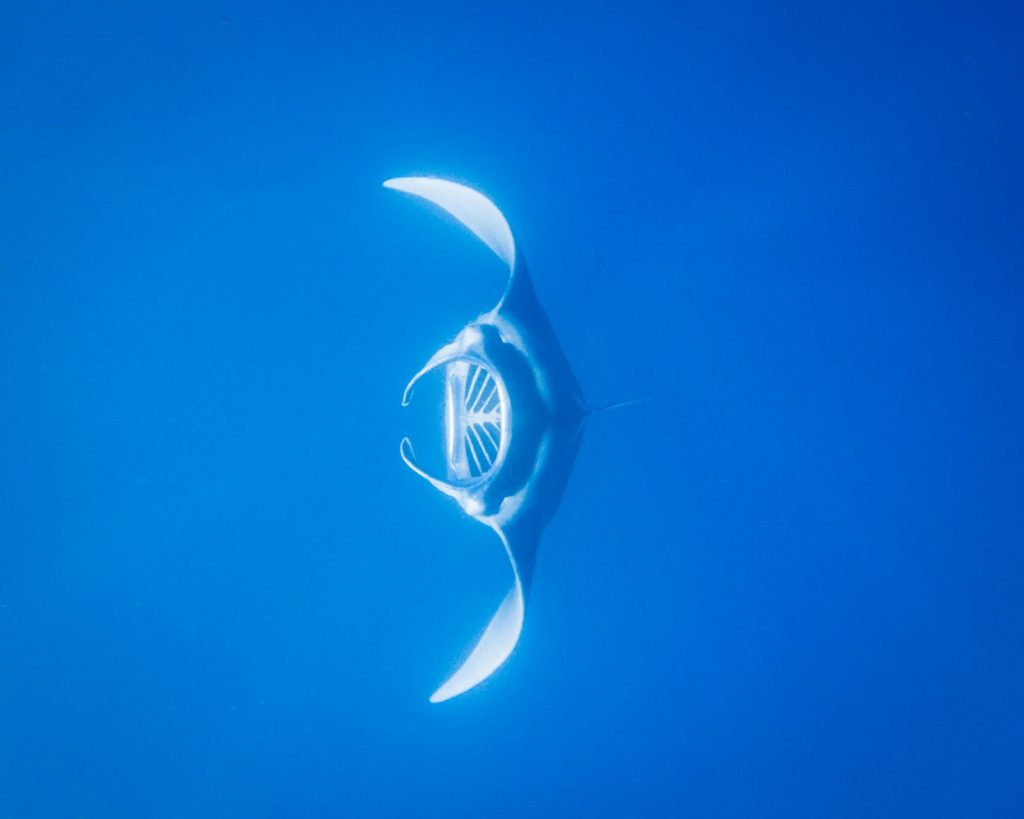
- Wildlife: Reef mantas using cleaning stations and feeding in the current, with occasional eagle rays, turtles and marble rays.
Honest manta reality:
Mantas are wild and seasonal. Central sites like Manta Point can deliver multiple encounters or none at all on a given day. Sightings around central Komodo tend to be more reliable during certain monsoon transitions and plankton‑rich periods, but there is never a guarantee.
Siaba Kecil & Siaba Besar – Turtle Central and Gentle Drifts
We often include the Siaba area on itineraries that mix divers and snorkelers.
- Type: Reef slope (Siaba Besar) and mild drift (Siaba Kecil).
- Depth: 5–25 m.
- Level: Beginner–Intermediate; great for relaxed dives and check dives.
- Conditions: Generally weaker currents than north Komodo; still influenced by tides.
- Highlights: Green turtles, hawksbills, schooling snappers and sweetlips, macro life among healthy coral patches.
These are also popular night‑dive locations on private charters when conditions align.
North Komodo: Advanced Current Playgrounds
Most of the legend around “hardcore Komodo currents” lives here. On a best Komodo dive sites cruise for advanced divers, north Komodo is usually the priority.
Sea conditions in the north are more exposed. We favour visits in the drier, more stable months (roughly April–November), but every week is different and safety comes first.
Castle Rock – Fish Soup in the Current
- Type: Submerged seamount.
- Depth: Summit around recreational depths; walls stepping deeper.
- Level: Advanced only; confident negative entry and current management required.
- Conditions: Strong to very strong currents. We usually time it for mild to moderate flow, but conditions can intensify rapidly.
- Highlights: White‑tip and grey reef sharks, jacks, giant trevallies, schooling fusiliers, possible dogtooth tuna and seasonal manta fly‑bys.
You spend much of the dive “hooked in” or holding position on the upstream side, watching the show. If your air or no‑deco limit runs short, we drift off the reef into the blue for a mid‑water ascent with SMB.
Crystal Rock – Color and Current
- Type: Rock formation that breaks the surface at lower tides with surrounding reef structure.
- Depth: Typically 10–30 m.
- Level: Advanced.
- Conditions: Similar current profile to Castle Rock, sometimes with complex eddies and down‑currents.
- Highlights: Rich soft corals, schooling fish, reef sharks, occasional pelagics. Excellent for wide‑angle photography on the right tide.
Castle and Crystal are often combined on a single north‑Komodo day, depending on tides and cruise duration.
The Cauldron / Shotgun – High‑Speed Pass
Often called “Shotgun” by guides, this is one of the most exciting drifts in Komodo — and also one that demands respect.
- Type: Channel between islands with a shallow “cauldron” depression and high‑speed narrows.
- Depth: Approx. 10–25 m in key sections.
- Level: Advanced; strong current, strict adherence to briefing required.
- Conditions: Ripping currents, standing waves, boils and sometimes whirlpools at the surface. Underwater you use the current to shoot through the narrowest point.
- Highlights: Schools of sweetlips and snappers, reef sharks, occasional rays, and in some seasons mantas passing overhead.
On a multi‑day cruise we might schedule Shotgun towards the middle once we’ve already seen you dive in easier current. We cancel or switch to another site if tide or wind makes it unsafe.
Southern & Offshore Options: Cooler Water, Softer Corals
Longer or tailored itineraries, especially private charters, sometimes reach deeper into the southern part of Komodo NP and Padar’s offshore reefs.
South Komodo & Padar Area – Soft Corals and Seasonal Mantas
- Type: Mix of sloping reefs, pinnacles and manta cleaning stations.
- Depth: Generally 10–30 m.
- Level: Intermediate–Advanced depending on site.
- Conditions: Cooler water and more variable visibility due to Indian Ocean influence. Currents can still be strong, though often a different pattern than the north.
- Highlights: Vivid soft corals, dense reef fish life, and in some seasons mantas. Fewer boats compared with central Komodo.
Manta activity in the south is typically associated with specific monsoon periods and plankton flows. Some seasons bring excellent encounters; others can be quieter. Again, we never promise big animals.
Offshore Reefs – For Experienced Groups
For experienced groups chartering the full phinisi, we can shape itineraries that include lesser‑visited offshore reefs depending on wind, swell, and conservation guidelines. These dives are almost always advanced due to exposure and logistics, and are planned conservatively around conditions.
Typical Komodo Cruise Itineraries for Divers
Exact routes change with the season and tide tables. Below are common structures we use at Cruise Labuan Bajo, boarding and disembarking in Labuan Bajo.
2 Days / 1 Night – Central Highlights with Taster Diving
Perfect if you have limited time or are traveling with non‑divers.
Indicative structure:
- Day 1:
- Morning departure from Labuan Bajo to central Komodo.
- 1–2 dives at training‑friendly sites (e.g., Siaba area or similar) depending on check‑dive needs.
- Afternoon visit to Padar viewpoint or beach stop (if scheduled).
-
Sunset mooring and optional night dive where conditions allow.
-
Day 2:
- Early dive at a premium reef or pinnacle like Batu Bolong (conditions permitting).
- Second dive or snorkel at Manta Point.
- Afternoon Komodo dragon trekking on Komodo or Rinca (subject to park guidelines) or a final swim stop.
- Cruise back to Labuan Bajo by late afternoon/early evening.
You can expect roughly 3–4 dives on a 2D1N cruise if you are certified and conditions cooperate.
3 Days / 2 Nights – Adding North Komodo
This is often the “sweet spot” for the best Komodo dive sites cruise if you want to include advanced north sites alongside central classics.
Possible flow (indicative):
- Day 1: Central Komodo check dives and reef dives (Siaba, Sebayur area) + night dive option.
- Day 2: Early steam north; 2–3 dives across Castle Rock, Crystal Rock and/or Shotgun depending on tide and group level.
- Day 3: Return south with Manta Point + Batu Bolong or a relaxed reef, plus a dragon trek if time and tides align.
Number of dives: often 7–9 for active divers.
4 Days / 3 Nights and Longer – Flexible and Custom
With four or more days we can:
- Balance north, central and (in some seasons) southern Komodo.
- Build in rest periods for your no‑fly time and deeper recovery.
- Spread out must‑see topside stops: Komodo or Rinca dragons, Padar sunrise/sunset, sandbar and beach visits.
Private charters through Komodo Luxury allow us to tune each day to your group: more macro, more manta‑hunting, or a heavier focus on advanced current for experienced divers.
For tailored route planning around your dates and level, you can plan your trip with our team or reach us directly on WhatsApp at +62 811‑3823‑875.
Safety, Seasons and Who Komodo Diving Is For
Komodo is not a “learn to dive from scratch in any conditions” destination. I prefer guests to arrive with realistic expectations and the right experience.
Seasons and Weather
Komodo can be dived year‑round, but each period has trade‑offs:
- Roughly April–November (drier months):
- Clearer water in many central and northern sites.
- More stable sea conditions for north‑Komodo crossings.
-
Popular for trips targeting Castle Rock, Crystal Rock and similar.
-
Roughly November–March (wetter months):
- Higher chance of rain and occasional trip adjustments for safety.
- Some southern manta aggregations peak in parts of this period.
- Fewer boats overall; can give a quieter park experience.
These are patterns, not rules. Every week brings its own weather and current variations.
Currents and Required Experience
Currents in Komodo range from gentle to very strong, with up‑currents, down‑currents and horizontal jets.
- Ideal minimum for most multi‑day “dive‑focused” cruises:
- Advanced Open Water or equivalent.
- 30–50 logged dives with some drift experience.
- For advanced north sites (Castle, Crystal, Shotgun):
- Certified to advanced level, comfortable negative descent, and used to strong current management.
- Consistent buoyancy control and situational awareness.
Open Water divers are welcome, but our site choices will be more conservative. For absolute beginners, we recommend focusing on training‑appropriate sites and snorkelling, not committing to deep or high‑current dives.
Safety Practices Onboard
On Komodo Luxury phinisi we follow a conservative safety approach:
- Detailed briefings on currents, entry/exit, lost‑buddy procedures.
- SMBs (surface marker buoys) and current lines used where needed.
- Dive profiles planned within recreational no‑decompression limits with generous reserves.
- Flexibility to change sites or cancel dives if conditions are not within our risk tolerance.
Your comfort is as important as your certification card. If a site or current level does not feel right, we adjust.
Life On Board a Komodo Luxury Phinisi
A best Komodo dive sites cruise is not just about what’s under the water. Our Komodo Signature and Komodo Prestige luxury phinisi are designed to be comfortable bases between dives.
Without inventing specifics for each vessel, here is what you can expect from a typical Cruise Labuan Bajo experience:
- Spacious cabins with air‑conditioning and private or semi‑private bathrooms depending on boat and booking type.
- Full‑board dining with freshly prepared Indonesian and international dishes and snacks between dives.
- Dedicated dive deck with space for kitting up and rinse tanks for gear and cameras.
- Lounges and sun decks for resting, reading or enjoying sunsets over the islands.
- Professional crew, including your dive guide(s), captain and hospitality team.
We operate both shared‑cabin departures and full‑boat private charters. For current options and layouts, our main information hub is via Komodo Luxury; you can plan your trip or message WhatsApp +62 811‑3823‑875 to match cabins and itineraries to your dates.
Pricing, Inclusions and How to Book
Komodo cruise pricing depends heavily on:
- Trip length (day trip, 2D1N, 3D2N, 4D3N+).
- Season (peak vs shoulder).
- Private charter vs shared departure.
- Cabin category and guest numbers.
- How many dives and which services you include (e.g. equipment rental, nitrox where available, specialist guiding).
As of the last verification in June 2026, indicative ranges for multi‑day luxury phinisi cruises in Komodo often fall in a broad band from the mid‑hundreds to low‑thousands of US dollars per guest, depending on the factors above. Exact park fees, fuel surcharges and optional extras are added on top.
Because park fee structures and operating costs change, we quote individually for each enquiry. No one can pay to change what we publish; if you proceed with our partner they may pay us a referral fee at no extra cost to you.
To get a precise quote:
- Contact our team through the Komodo Luxury channels linked from this site.
- Message us directly via WhatsApp at +62 811‑3823‑875.
- Email sales@komodoluxury.com with your dates, number of divers and approximate experience level.
Our sister platforms — charterlabuanbajo.com, liveaboardlabuanbajo.com, labuanbajodivecruise.com and privatekomodocruise.com — all connect back to the same Komodo Luxury operational team.
FAQs: Komodo Cruise & Dive Sites
Is Komodo suitable for beginner divers?
Yes and no. Some central sites with milder currents are suitable for beginners, and we often run check dives at easier locations early in a cruise. However, many of Komodo’s most famous sites in the north are strictly advanced due to strong, complex currents. If you are newly certified, we recommend a cruise that focuses on gentler reefs and snorkelling, and skip advanced current sites until you have more experience.
How many dives can I expect on a 3D2N Komodo cruise?
On a dive-focused 3 days / 2 nights cruise in Komodo, most certified divers can expect in the region of 7–9 dives, including optional night dives where conditions allow. The exact number depends on weather, currents, your air consumption and how much surface time you want to dedicate to dragon walks, viewpoints and beaches.
When is the best time to see mantas in Komodo?
Mantas are present in Komodo year-round but activity peaks vary between central and southern sites, and from year to year depending on plankton and currents. Central Komodo’s Manta Point can be productive in many months, while some southern mantas are more seasonal around parts of the wetter months. Even in peak times, sightings are never guaranteed because mantas are wild animals.
Do you see hammerheads around Komodo?
Hammerheads are occasionally reported at some deeper and more offshore locations in the wider region, typically by experienced groups on specific trips. They are not a mainstay of standard Komodo cruise diving spots and should always be treated as a rare bonus, not an expectation. We never sell cruises on a promise of hammerhead encounters.
How far in advance should I book a Komodo cruise?
For peak periods such as major holidays or mid-year dry months, it is wise to book several months in advance, especially if you want a private charter or specific cabin category on Komodo Signature or Komodo Prestige. Shoulder seasons sometimes have more flexibility. To check live availability and shape an itinerary around your dates and dive level, please plan your trip or message us on WhatsApp at +62 811-3823-875.